Research
Clinical references
Sikiric P, et al. (2018) "Brain-gut Axis and Pentadecapeptide BPC 157: Theoretical and Practical Implications" Current Neuropharmacology. DOI: 10.2174/1570159X16666180501151610
Chang CH, et al. (2011) "The promoting effect of pentadecapeptide BPC 157 on tendon healing involves tendon outgrowth, cell survival, and cell migration" Journal of Applied Physiology. DOI: 10.1152/japplphysiol.00945.2010
Seiwerth S, et al. (2018) "BPC 157 and Standard Angiogenic Growth Factors: GI Tract Healing, Lessons from Tendon, Ligament, Muscle and Bone Healing" Current Pharmaceutical Design. DOI: 10.2174/1381612824666180712110447
Questions
Frequently asked questions
What conditions is BPC-157 typically used for?
+
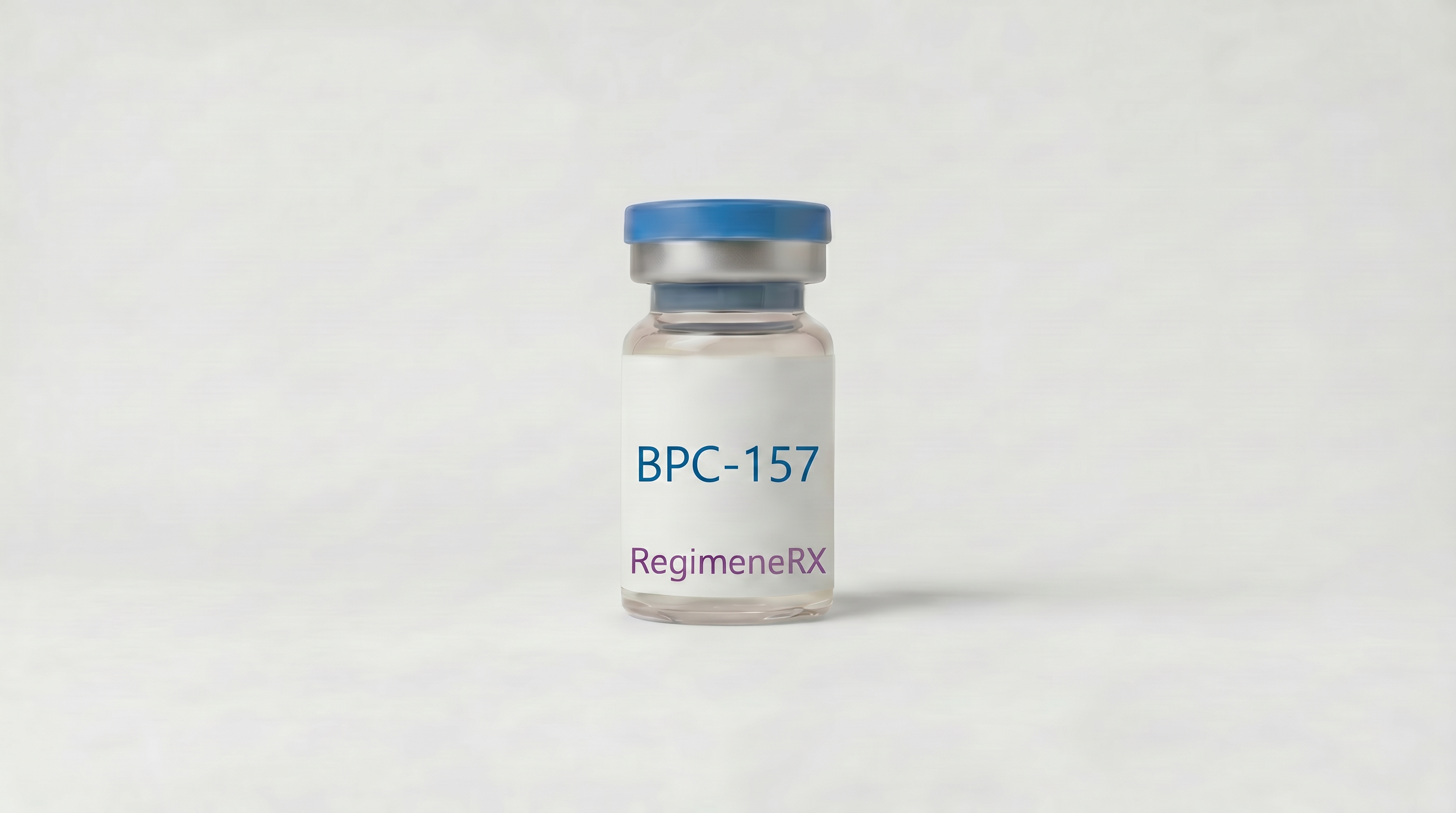
BPC-157 is most commonly prescribed for musculoskeletal recovery, including tendon and ligament injuries, joint pain, and post-surgical healing. Some patients also use it for gastrointestinal support. Your provider will evaluate whether it is appropriate for your specific situation.
How long does a typical BPC-157 treatment course last?
+
Treatment duration varies based on the condition being addressed. Many protocols run 4-8 weeks, though some patients benefit from longer courses. Your provider will design a protocol based on your injury type and healing progress.
Can BPC-157 be combined with other peptides?
+
BPC-157 is sometimes used alongside other peptides such as TB-500 for enhanced tissue repair. Any combination therapy should be discussed with and supervised by your prescribing provider.
Are there side effects with BPC-157?
+
BPC-157 is generally well tolerated in clinical use. Mild injection site reactions (redness, tenderness) are the most commonly reported effect. Serious adverse events are rare when used as prescribed under medical supervision.